
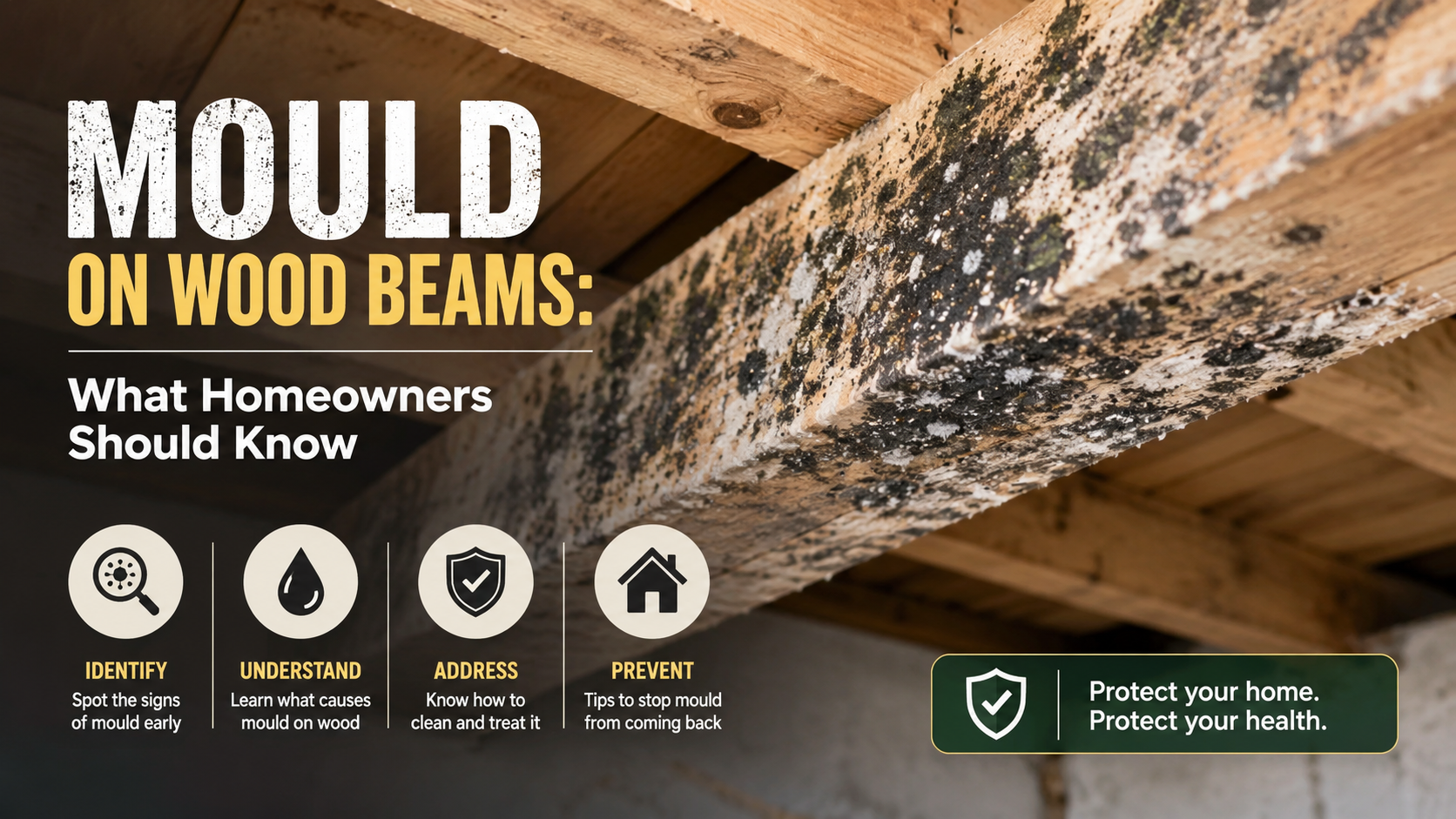
Every structure has a story to tell; the structure of your house has a story written in the structure of everything around you; beams of wood are keeping your floors, attic, and walls together, and they have weathered countless storms during the years, they have outlived many seasons. The only thing that’s going to ruin that story is a little thing called mould. It kills the wood very slowly, giving it plenty of time to make itself comfortable and become a permanent resident of the wood beams in your house. Most homeowners will never see how serious a problem mould in their home is until it has made itself at home for quite some time. Therefore, mould on wood beams is one of the most overlooked dangers to the future of a house as well as the people living in it.
Why Wood and Mould Are Such Dangerous Companions
For fungal growth, wood is essentially a 5-star hotel. It is extremely porous and retains moisture, plus it has lots of organic material for the spores of moulds to use for food. For mould to grow, all it needs is to be between 2°C-40°C, humidity levels are above 60%, plus it needs to be a little dark. Your attic, basement or crawlspace basically gift wraps these conditions to mould all year round.
Once the spore lands on a damp beam and establishes itself, you can expect to see evidence of mould within 24 to 48 hours. In a matter of weeks, what started as a small fuzzy patch will develop into a vast network of hyphae (the thread-like roots of the mould) that continues to invade further and further into the fibres of the wood.
This issue is not merely aesthetic either. This is just the start of structural mould damage.
The Hidden Architecture of the Problem
Homeowners mostly only notice mould when it is visible, such as on the ceiling of the bathroom, the wall of the basement, or in the corner behind a washing machine. However, attic mould is common and dangerous, mainly because people do not check them often enough.
Attics are very susceptible to mould for many reasons. They are subject to roof leaks that, even if they are small, cause water to drip directly onto structural lumber. There is also no way for moisture trapped in the warm humid air to escape from wood surfaces until that humid warm air is removed by airflow. Kitchen and bathroom exhaust fans that vent into an attic instead of outside also release moisture into an attic by pumping hot wet air directly onto the supports (i.e., beams) that support the roof over head. The result is an accumulation of moisture, without any evidence of it, that allows mould to grow and become established within the structure of a home.
Urban Environmental inspectors have found Stachybotrys chartarum (commonly known as “black mould”) growing on attic beams that the homeowner had no idea about. Black mould is very aggressive, and it can produce mycotoxins that will become airborne and circulate throughout the ventilation system within a house to negatively impact indoor air quality, as evidenced by respiratory issues, headaches, fatigue, and severe allergic reactions in sensitive individuals.
Reading the Signs Before It’s Too Late
Mould that exists on wood beams can cause serious damage to a house but often the worst of this damage will not be seen by homeowners because it occurs out of sight. However, if you know what to look for, you can see some of the signals that indicate the presence of mould.
The first and most obvious indicator of mould presence is discolouration. Greyed wood, dark streaks along the beams and fuzzy green, white or black patches on wood beams indicate the presence of an active colony of mould. A musty/earthy smell is another indicator of mould presence. The “musty” smell will be present long before any other visual signs of mould will be present; especially in enclosed spaces such as attics and/or crawl spaces. The “musty” smell is an indication of the off gassing of the by-products of the mould metabolic processes and is a visual indication for what can not be seen.
A later stage indicator of mould present on wood beams is the warping/softening of the wood itself. When mould has been feeding on a wood beam long enough to weaken the wood enough to lose its structural integrity or cause the creation of small cracks and/or soft spots (on drywall) near supporting points.
When you see any of these indications of structural damage by mould on wood, you really should contact a professional inspector.
What Wood Mould Removal Actually Involves
Here’s a truth many DIY methods won’t tell you: The wood mould removal from structural beams is not a 2-day do-it-yourself project.
The old trick of using bleach to clean surfaces works for cleaning off the surface of mould, but since wood is a porous material, bleach cannot penetrate the surface of the wood effectively. Any roots of mould on the beam will regrow, many times worse than before. You’re not fixing the problem; you’re only causing the mould to temporarily retreat.
The correct way to remove mould from wood by a professional involves the following:
- Containment: the contaminated area must be isolated from the rest of the house to avoid the spread of mould spores to the remaining clean areas of your house during the hazmat removal process of contamination.
- Removal: If you have a severe mould infestation, some of the beam will need to be removed and replaced because you cannot repair wood beyond a certain depth with a product.
- Treatment: After the mould is removed, a special antimicrobial product will be applied to the affected areas, as well as the surrounding areas, to stop any mould from coming back.
- Drying/Monitoring: The source of the moisture will need to be identified and corrected in order for mould to not return.
We take the same full-cycle approach to every mould remediation job at Urban Environmental, because we don’t want to make money providing the same service to you over and over by addressing the symptom and not the root cause!
The Indoor Air Quality Consequence You Can’t Ignore
One of the least considered aspects of mold on wooden beams is how it impacts the quality of the air we breathe on a daily basis. Air in buildings becomes significantly contaminated with mold spores and mycotoxins as mold grows and reproduces, so when there are active colonies of mold growing in structural materials in the building, there will be a significant decrease in indoor air quality.
The World Health Organization has stated that mold exposure contributing to indoor air quality has resulted in chronic respiratory diseases and an increase in the severity of asthma and decreased lung development in very young children. Since most people spend more than 90% of their lives indoors, this is not an issue that can be overlooked — this is an issue that needs to be addressed.
This is why Urban Environmental performs air quality testing in conjunction with all structural mold removal, providing a clear before-and-after photo showing what the results of the removal efforts actually accomplished.
Prevention Is Significantly Cheaper Than Cure
If there’s one thing that a decade of environmental remediation work teaches you, it’s that the homeowners who invest in prevention spend a fraction of what those who wait until crisis hits will eventually pay.
Inspect your attic and crawl spaces at least once a year, particularly after heavy rainfall or winter. Ensure all exhaust fans vent to the outside. Maintain gutters and downspouts so water is directed well away from your foundation. Monitor indoor humidity with an inexpensive hygrometer and keep levels below 55%.
And if you’re buying a home? Always insist on a mould inspection before you sign. What’s hid den in the beams above and below your living space matters every bit as much as what the estate agent is showing you.


