
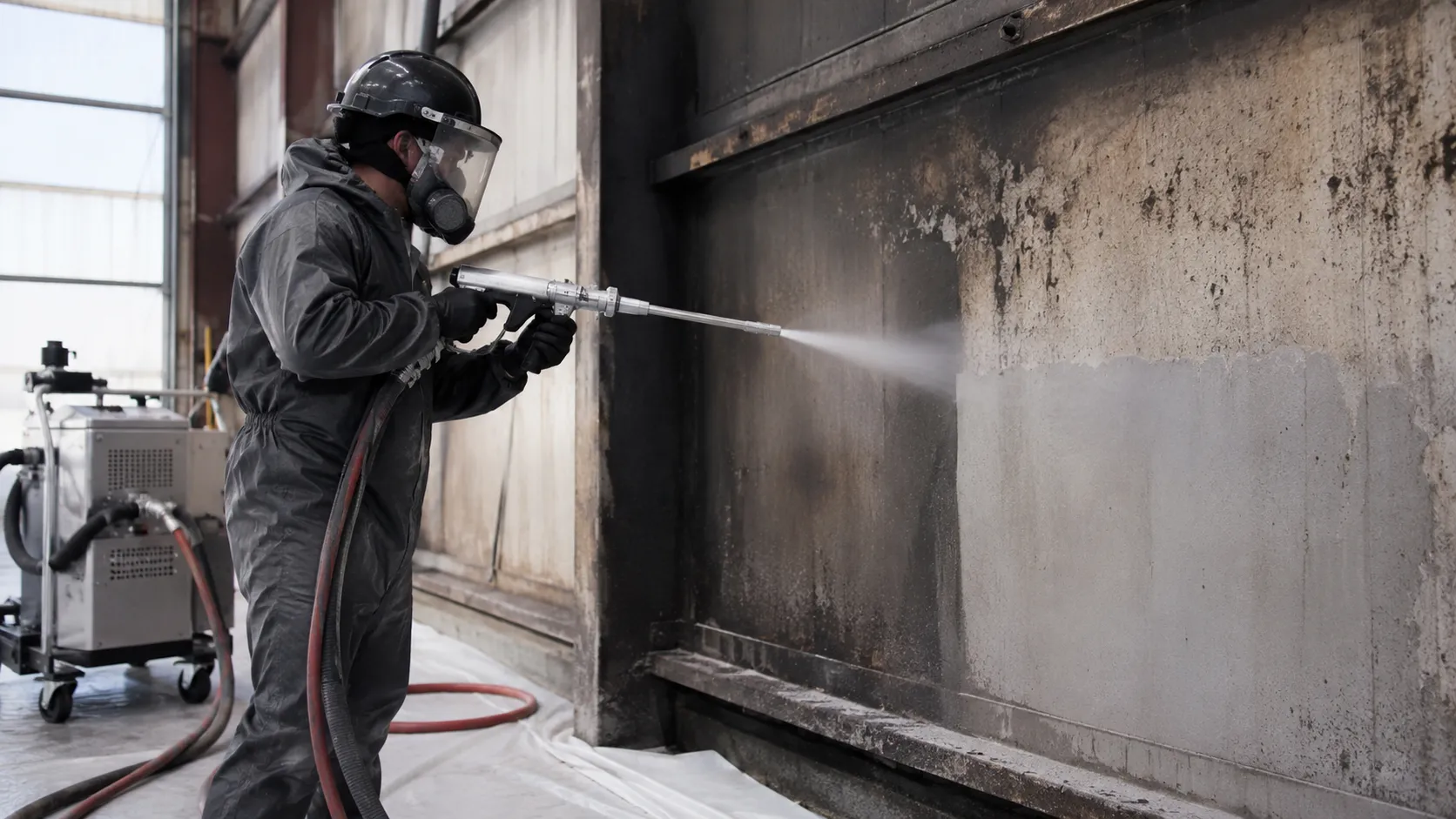
 Buildings that endure fire, water, or biological damage will frequently have residues that are difficult to clean even with regular cleaning techniques. Soot can adhere to drywall, the smoke smell can permeate the wood structure, mold can develop on wet masonry, and charring can cover structural beams. Owners and managers of properties are starting to be concerned with what one can clean using dry ice blasting, so one needs to know whether this technique can help to restore the property.
Urban Environmental is a company that uses advanced techniques of surface remediation. Dry ice blasting has become one of the most effective technologies for restoration. The following article gives a description of the dry ice blasting process, types of contamination that can be eliminated with its help, and reasons for its increasing popularity among professionals who conduct the restoration of buildings.
Understanding Dry Ice Blasting
Dry ice blasting is a type of cleaning known for being non-damaging to surfaces. It is a technique that uses compressed air to shoot tiny pieces of solid dry carbon dioxide at an object. Unlike sandblasting or soda blasting, the dry ice used in this technique turns into gas right after it hits the surface of the object; hence, it leaves no secondary waste. The kinetic energy of small dry ice chips, added to the freezing temperature of dry ice (-78.5°C), assists in breaking and removing dirt and other materials from the surface.
Thanks to its unique characteristics, dry ice blasting is one of the best techniques for using dry ice to remove unwanted dirt. That being said, this method is very efficient when applied to certain surfaces, especially after fire, flood, or prolonged neglect. Adding to that, no moisture, grit, or chemicals that usually come with the standard cleaning technologies are used during the dry ice cleaning process.
What Can Dry Ice Blasting Remove From Building Surfaces?
In simple terms, dry ice blasting helps eliminate many kinds of contaminants from almost all construction materials. For example, it can be used on wooden, concrete, or stone buildings, or a building made of metal or plaster. Let’s take a look at the most common uses of this method.
Soot Removal
After the fire is extinguished, it leaves a lot more than just burned objects in its way. Instead of being burned, nearby objects are covered in soot. Soot particles make it hard to perform any kind of cleaning since they have a static charge and can penetrate into porous materials (such as drywall, plaster, or unsealed wood).
Classic cleaning techniques (like scrubbing or using an abrasive sponge) fail to help as they simply push the soot even deeper into the construction material. That’s where dry ice blasting is superior—the pellets created through this method break the soot layers upon impact and help to easily remove it without pressing it into the surface even more.
Dry ice blasting can be used effectively on:
- Ceiling joists and rafters that are visible after a fire has been restored
- Air-conditioning ducts that are covered in soot after a fire
- Fireplaces and chimneys that are made out of brick or masonry
- Steel beams and other support system parts in commercial buildings.
Smoke Residue Removal
In addition to visible soot, smoke also leaves behind invisible residues that can be found in wall spaces, lumber, and thermal insulation. These residues often cause the lingering smell of smoke, which can remain in the building long after visible fire damage is cleaned.
Smoke residue removal is one of the more technically complex parts of the restoration process because residues may be acidic, sticky, or oily depending on what materials burned.
If smoke residues are left untreated, they will keep emitting gases and create odor problems for the building occupants.
The use of dry ice blasting solves the problem of residue removal by removing the residue layer without introducing any moisture that could activate the smell. Since the CO₂ pellets immediately vaporize, there is no washing stage involved, and the issue of dirty water is absent.
It is clear that this method is much better than pressure washing, which may push smoke residues even deeper into wood or masonry.
Mould-Spore Removal
One major distress that individuals in charge of maintaining their homes have to contend with is mold contamination. Mould spores can thrive on practically every organic surface that contains moisture, including wooden structures, flooring, panels, and even concrete that is sufficiently moist.
Mould-spore removal through dry ice blasting is a preferred method among remediation specialists, as it relies on the fact that mould requires moisture to grow and propagate. Traditional mold removal methods often rely on abrasive techniques such as wire brushing, sanding, or chemicals that may cause spores to become airborne and spread around.
Using dry ice blasting alongside the right containment and negative air pressure systems enables technicians to:
- Get rid of mold from wooden structures, joists, and flooring.
- Remove mold from concrete walls and foundations
- Treat HVAC components without taking them apart in many cases
As a rule of thumb, mold remediation has to be employed in conjunction with whatever led to the presence of moisture because, while dry ice blasting is suitable for eliminating mould, Urban Environmental Remediation Services plans to help clients eliminate the root causes of mold problems before they occur.
Char Removal
When a fire burns thoroughly enough to cause wood or structural materials to char, it creates a brittle black layer of char that should be taken away before repairs, sealing, or encapsulation can take place. The process of char removal is a vital component of fire restoration, especially when dealing with structural timbers, which can still be saved if only the char level is removed after being taken off safely.
Dry ice blasting is particularly effective in this case because it can remove the fragile char layer without damaging the wood beneath. This method is much softer as compared to mechanical sanding or wire brushing, which can possibly chip or indiscriminately remove materials, causing structural issues with load-bearing components. Thanks to the properly adjustable pressure of the dry ice blasting equipment, technicians can regulate the intensity of the blast according to the material and the general extent of carbonization.
Additional Contaminants Dry Ice Blasting Can Remove
Although among the most popular methods, besides removing soot, smoke residue, mold, and char, the use of dry ice blasting also facilitates:
- The removal of grease and oil from industrial kitchens and production plants
- Removing graffiti and paint from metal, brick, and concrete surfaces
- The removal of biofilm and algae from outdoor facades of buildings
- Residues from adhesive tapes, labels, and old signs
- Wiping off accumulated dirt and dust from production environments
- Killing bacteria and viruses, which makes this method particularly useful in the food processing industry and medical service agencies.
This multifunctional application makes dry ice blasting one of the techniques used across different sectors, from historical preservation to industrial equipment maintenance and reconstruction.
Why Choose Dry Ice Blasting Over Traditional Cleaning Methods?
Knowing what dry ice contaminant removal can clean is just one aspect. Owners of various properties may be interested in understanding the advantages of this process, which make it preferable to some other cleaning methods. Some benefits of dry ice blasting include:
No Residual Waste. Dry ice turns into gas once it strikes the surface of the object being cleaned, and therefore there won’t be cleaning waste left after the procedure, unlike some other methods with waste harmful to the environment.
Dry Process. Dry ice cleaning won’t bring any water into the materials being cleaned, which is very important during mold cleaning and when working with electrical devices.
Doesn’t Damage Any Surfaces. The process can be regulated in a way that the surfaces won’t be damaged during cleaning, which is especially useful for cleaning historical sites.
Less Time Needed for Dry Ice Cleaning. Due to the fact that dry ice cleaning doesn’t require rinsing, cleaning waste, or masking time, which is often needed when using traditional cleaning methods.
Minimized Health Hazards. The use of dry ice blasting does not include any hazardous chemicals, and when used with good ventilation and containment measures, it reduces the chances of the release of airborne contaminants when compared with dry sanding or brushing.
The Dry Ice Blasting Process: What to Expect
Property owners who are new to this method can benefit from understanding the process of removing contaminants using dry ice. In general terms, the process consists of five main steps:
- Assessment and Testing:Before starting any work, the technicians make sure to evaluate the level of contamination, the materials involved, and whether there are any structural issues.
- Containment Setup : Barriers and negative air systems are put in place to avoid cross-contamination of rooms.
- Blasting: The technicians use specialized equipment to apply pellets of dry ice to the surfaces.
- Inspection : After the blasting process is over, all the surfaces are checked to see whether complete decontamination was achieved.
- Follow-Up Treatment : Sometimes, additional treatments such as antimicrobial treatment or odor sealing may be needed if there has been a case of mold or the smell of the contaminant persists.
When Dry Ice Blasting May Not Be the Right Fit
Although dry ice blasting is very flexible, it may not be the best choice in every case. Deep stains, certain biological contaminations requiring chemical disinfection, and surfaces that are structurally unstable may need a combined method. An experienced remediation team should analyze each job separately, instead of attempting to apply a universal approach.
This is why it’s important to have the help of professionals, who can decide whether dry ice blasting is sufficient by itself or it should be combined with other processes.
Trust Urban Environmental for Professional Restoration
The choice of the remediation method could mean success in restoring your property rather than just expensive repairs. The technicians at Urban Environmental know how to use advanced dry ice blasting techniques, and these methods can be applied safely regardless of the type of material and type of contamination.
Whether it is fire damage that demands soot removal and smoke removal, mould infestation, which requires thorough mould removal, or burnt structures that need professional removal of charred materials, the specialists at Urban Environmental are equipped with the means and the knowledge to provide your property with the necessary service.
While working on every project, we find out the most complete information about the contamination, materials affected, and the extent of damage. Our goal is to make your building safe and clean, and we do our best to achieve results with the minimum effort and time.
Conclusion
Dry ice blasting has shown itself to be one of the most effective and versatile methods of building remediation. If the building has been damaged by fire, water, or biological attack, where there is soot and smoke, mold and spores, or even charred wood, this method can be employed to provide solutions that are not offered by other forms of cleaning.
If your building has gone through fire, water, or biological damage and you would like to know how dry ice blasting works in the removal of any materials from the surfaces of your building, get in touch with Urban Environmental as soon as possible.


