How to tell you have a mould problem

Mold Word Cloud on Blue Background

Mould has been an issue for homes on the West Coast since people first inhabited these gorgeous shores, but in today’s day and age, it continues to wreak havoc. In this article, we are going to provide you with a few tricks and tips to ensure you can tell if you have a mould problem.

  • Strange Smell

Mould has a very particular smell, and it truly stinks. If you notice an unpleasant odour in a specific room, it might mean that mould is living within the walls. The best way to determine if you do have mould is to call a company like Urban Environmental, who can run tests and start the abatement process if needed.

  • The Appearance

You might be able to see the mould before it starts to become an issue. Generally, you will be able to see mould that is easy to distinguish between it and common soap scum you would find in a shower stall or tub. As well, you may be able to spot mould in damper areas in your home like the furnace room, garage or basement. If you do see mould, now is the time to call Urban Environmental to ensure your mould can be abated immediately.

  • Knowing where your moisture sources are

If you have been dealing with a variety of water-related issues such as leaks or water damage, your home is quite susceptible to mould. If you do discover moisture, you will need to start to find the source of the moisture. If you are unable to find the source, do not fret, but you do need to keep an eye out on the area. Moisture breeds mould, and although you might not see any at the moment, a mould colony can spring up practically overnight. Focus on identifying and fixing the moisture source will go a long way in ensuring your home is mould free.

  • Health Symptoms

Because mould cannot always be seen, it should be no surprise that one of the first signs of a mould infestation is flu-like symptoms. From raspatory issues including coughing, shortness of breath and constant dry coughs, too cold or flu symptoms including a running nose and allergy-like symptoms. If you are experiencing chronic issues, it might be due to mould!

Final Thoughts

Mould is not something to play around with, and if you suspect mould in your home, you need to call the leaders in mould abatement in and around Vancouver, Urban Environmental.

The five signs that you might need to replace your home insulation

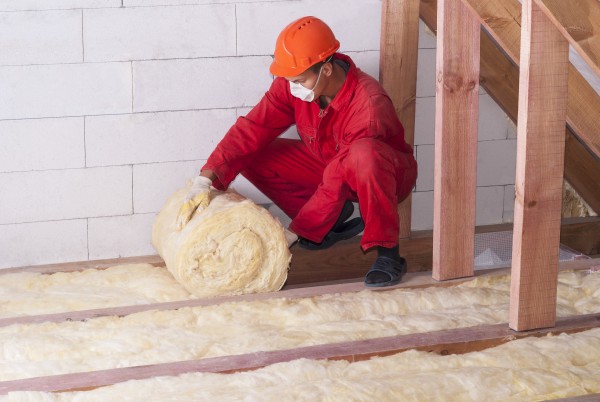
Insulating mosaic

As one of the top-rated insulation company in Vancouver, the team at Urban Environmental knows when you need to replace your insulation. However, this does not mean you are aware of the signs! No matter if you are a newer homeowner or an established resident, the signs that you need to replace your home insulation might drift over your head. They are minute but critical, and as insulation will cost you money over the long run, the faster you move to replace it, the better. Thus, in this blog, we are going to showcase the five signs that you might need to replace your home insulation!

  1. Water Damage

Water and insulation do not match, and if your home insulation has any moisture in it, it can render it utterly ineffective. This means no matter if your insulation is damp or soaked, it needs to be replaced. Plus, with the risk of mould growth in wet insulation, it is best to call Urban Environmental sooner rather than later.

  1. Drafts

Have you been noticing drafts in your home? If you feel cold drafts moving around your house that is not from your windows or doors, it is time to do some investigating. Chances are you will track these drafts to the attic or crawlspace, which means you will need to look at replacing your home insulation to avoid heat loss.

  1. Differing indoor temperatures

Fluctuating temperatures in your home can be a sign that you need to replace your home insulation. This is exceptionally noticeable from room to room or even floor to floor, and if you do notice it, it is time to call Urban Environmental.

  1. High heating and cooling costs

Yes, we live in a time where heating and cooling is expensive, but if you start to notice your costs creeping up without changing the price, it can be a sign that you need new insulation. This means if your heating system is working harder in the winter, or your air conditioner is working hard in the summer, it might not just be the temperature. Simply put, high-quality insulation from Urban Environmental can make the difference between saving and owing money at the end of the year.

  1. Pests

Pests are never a good thing to deal with, but when you consider insulation can make the perfect home for rodents, you will need new insulation. Pests such as squirrels, rats and even mice have been known to nest in the attic or crawlspace insulation, and this is not a good thing. If you do discover pests, call the exterminator then call the team at Urban Environmental.

From insulation removal to insulation instalment, the team at Urban Environmental is one of the premier options in and around Vancouver for all things insulation!

When it comes to demolition, what materials are the best to deal with?

Metallic Wrecking Ball Shattering Wall. 3D Illustration.

Here at Urban Environmental we typically deal with our services, but in this blog, we decided to talk business. We have been operating in the building demolition space for more than a few years, and when it comes to our demolition services, we always look for the best way forward. Whether it is dealing with green vs other waste, or recycling building materials, here are some of the most effective materials that can be recycled upon demolition.

Concrete

One of the most popular construction materials in the world is concrete, and a single commercial demolition can yield tons of concrete. Generally, concrete is grounded down into gravel which is then used for building material for new buildings. There are some companies that offer on-site concrete crushing that we work within and around Vancouver to speed up the process of concrete to gravel.

Steel

Steel is one of the most valuable resources on a job site, and during demolition, it is often worth it for our technicians to separate it from the other materials. This is especially true when we are demolishing older buildings as the quality of steel can be higher than the more common production steel that we see in everyday work. Steel or scrap metals can be recycled to create new products from fridges to cars.

Interior doors and beams

Old and reclaimed wood has seen a massive upswing in popularity over the last few years, and as a demolition company, we have seen our fair share in interior doors or beams. There are a few companies that we work within Vancouver that will touch base with us during demolition, and even if the wood is in bad condition, it can be recycled to be included in another project.

Sinks and Toilets

One of those crazy things that we have learned while completed demolition is that sinks and toilets can be one of the most prized items. If we are working with a salvage company, they will inspect and take out any sinks, toilets or tubs that are worth restoring to their original condition to resale down the line. If they are not, porcelain can be recycled with the concrete to create gravel. While steel fixtures are utilised with the other scrap metals.

So what does this mean, well for us here at Urban Environmental it implies that our demolition services are a little more complicated than knocking down a building? We want to save as much of a structure as possible, and no matter if we are looking at steel, interior doors and beams, sinks and toilets or even concrete, our team will do our best to share, or recycle them if necessary. Urban Environmental is a proud Vancouver company, and we always do our best to save our history, even if it is a sink.

High-Risk Warning Signs of Hoarding

Background concept wordcloud illustration of hoarding

Here at Urban Environmental, we have been called to our fair share of cleanups on hoarding sites. Often this is because of the biohazards that come with an individual who has been hoarding for some years. We have had to deal with human waste, and animal decomposition along with other things, so take it from us, hoarding is a severe disease that needs to be monitored. Thus, we have brought together some high-risk signs of hoarding to look for in your friends and family.

Clutter Collection

More than just a few odds and ends, clutter collecting will begin to dominate the way in which an individual moves within their home. Whether you are dealing with excess furniture or an inability to remove trash from the house, clutter collection is a dangerous warning sign of hoarding. Clutter is a gateway to hoarding, and if not taken care of, can lead to clutter covering every single centre metre of space in a home.

Social Anxiety

Social anxiety by itself is not a risk sign of hoarding, but in a combination of a few of the other risk signs, it can showcase a trend towards hoarding. Generally, before an individual begins to hoard they will remove themselves from social relationships, and thus social anxiety when combined with isolation can lead to hoarding.

Alcohol Dependence

One of the major issues when it comes to hoarding is alcohol dependence, and although there is no cemented link between the two diseases, one thing that is clear is that they both stem from an addictive personality. Alcohol is a poison in two ways. First, it ensures an individual is not taking care of their body, and secondly will only add to the clutter in a home.

Early Warning Signs

It is has been shown throughout the years that children and teens that gravitate towards collecting broken objects and trash could be showing early signs of hoarding. This does not mean that a child who likes to collect seashells is going to be a hoarder, but if someone is collecting garbage throughout their teen years without creating something out of it, they may be showing early behaviours towards a future of hoarding.

Family History

One of the current focuses for researchers around hoarding has been the link between an individual and their family with the disease. It has not been proven that genetics play a role in the condition, but current data shows a correlation between family members with hoarding disorders and an individual with the same disease. Researchers are currently engaged in some studies across North America on determining if hoarding is a genetic bond or a learned trait.

Hoarding is a severe disease, and the team at Urban Environmental is hopeful that these early warning signs will help you or a family member identify and take corrective measures with a loved one before we need to get involved.

Where asbestos can be, and what you need to do if you find it

Asbestos word cloud concept

Vancouver is a city that is full of life and Highrise condos, but throughout the city, the post-war housing style homes are still dominating the urban landscape. This can cause an issue as if a home has not been appropriately treated; chances are there is asbestos. In this article, we are going to look at where you can find asbestos and what to do if you see it in your home or office.

Where can asbestos be found

No matter if we are talking home or an office, asbestos can genuinely be anywhere, especially in an older house.

Insulation

Insulation that was installed between the 1920’s and 1980’s and is considered vermiculite insulation could and probably has asbestos.

Ceiling

A home that features popcorn ceilings tiled or textured paint, and was last painted in the early 1980’s or below typically has asbestos.

Interior Walls

Specific brands and fibres of wall tiles and textures contained high levels of asbestos up until the 1980’s as a fire-resistant feature.

Window Putty

Up until the 1980’s asbestos was used in window putty to add strength and fire resistance to windows.

Wood Burning Stoves

Before the 1980’s the wood around wood-burning stoves would be protected by asbestos paper due to its flame resistant properties. In newer fireplaces, the fake ash, embers and logs can contain asbestos paper depending on the manufacturer.

Water Heaters

Depending on the manufacturer, water heaters can contain asbestos within the insulating blanket on the metal cover.

Garages
Older garages or sheds could be constructed with wall and roof tiles that contain asbestos. Plus you may also have asbestos pipe insulation that was designed to avoid your pipes freezing.

Boilers

Most manufacturers before the 1970’s utilised asbestos for both exterior and interior of the boiler.

What to do if asbestos is found

If you find asbestos, you need to take a few immediate measures. The first is to call the team at Urban Environmental. We are one of the premier asbestos abatement teams in the city, and no matter if it is a residential or commercial build, the team at Urban Environmental has you covered. We will either contain or remove the asbestos and bring the affected building materials to a government-approved dumping site where it is held and destroyed. Asbestos is nothing to joke around with, and here at Urban Environmental we go above and beyond to ensure our technicians are safe, and the home or office we work on is entirely abated and protected by the time we leave.

Asbestos… it could be everywhere, but luckily for those in Vancouver, Urban Environmental is the premier option for asbestos abatement in the city. If you spot asbestos, call the team at Urban Environmental, it is that simple.

Mould what mould?!?!

Crop spraying

As a first time home buyer, it can be tough to remember to do all of the proper things. One of the main failures of first-time homebuyers is to check the various nooks and crannies of their home during the inspection for mould. Black mould is one of the most common issues in homes in and around Vancouver, and for many, this can mean serious allergy issues, and permanent damage if these mould spurs are not brought under control. So in this blog, we are going to look at what you need to do if you spot mould in your home.

1. Inspect

If you have found a potential mould spot in your home, chances are they are in multiple places. Take a quick peek around the attic and any other exposed spots of the house. Do not go over the top, but the faster our technicians are told about other problem spots, the better we can control the growth. During this check, be careful not to touch or inhale any of the moulds, and if you are not comfortable with an inspection call the team at Urban Environmental as soon as possible, as we will be on site quickly.

2. Call Urban Environmental

If we were not called during step one, we need to be involved in phase two. Once we get a phone call from a client, our trucks and technicians rush into business. Our team has been trained to handle mould spurs, and black mould is one of their specialities. Once on site, we will do a full inspection of the home to ensure we are not missing any spots and they will chat with the homeowner about treatment options. Typically, we do not require the family to leave home, but in sporadic cases, we have been known to request the family move out for a while due to the dangers of these spores to their health.

3. Let the experts do their work

Our treatments will depend on the severity and strain of mould, but generally, we will deal with spot treatments to ensure that the mould does not spread and can be quickly killed off. As the mould is a living thing, our technicians will work to stop its spread using safe chemicals and sprays at the site of the infestation.

4. Enjoy a mould free home in only a few days

Once the team at Urban Environmental has finished up our last treatment, you and your home will be mould free at that location. Mould is a general issue in the Greater Vancouver Area, and although we may have dealt with that section of your home, that does not mean your home will always be free of mould. We often suggest to all of our clients to have a home inspector come into the house to ensure that there are no other issue spots. As we never like coming back to deal with another pocket of mould!

From mould to black mould, the team at Urban Environmental is your premier option for mould remediation here in Vancouver and the surrounding area!

Death and decay: What happens during a biohazard clean up

Biohazard stamp on wooden background

No one hopes to ever have to deal with the aftermath of a suicide or murder, especially in your own home or a property under your care, but sometimes the unfathomable happens and someone needs to clean up the aftermath. Crime and trauma scene cleanup jobs are one of the toughest to do in our industry, but Urban Environmental has years of experience dealing with the unpleasant and often painstaking task of removing all traces of blood, bodily fluids, human tissue and other harmful materials from the scene of the incident.

Deep cleaning and sanitizing all surfaces that have been contaminated is an obvious necessity, but often the damages sustained by a property go beyond what the naked eye can see, and that is why it’s best to leave it to professionals. We here at Urban Environmental have been completing these for years, and are looking forward to working with you.

When we initially visit a scene to assess the scene and provide a quote you can be assured a professional interaction with our specialists. In the instance of an injury or death, our team will process and remove all furniture and detritus that has been contaminated with blood or other bodily fluids. In many cases, especially when dealing with a bloody mattress or sofa, we must cut out and separate the affected areas and remove them in biohazard transport containers. Often items of furniture cannot be taken to a medical waste facility whole, but after the biohazardous material is removed we can dispose of the furniture through usual garbage removal means. Urban Environmental always follows provincial and federal regulations when it comes to removing biohazard materials and residential waste.

In some cases, carpeting and flooring must be taken up to uncover and remove stains and fluids beyond what we can see on the surface with the naked eye. We always take great care to remove everything that is contaminated but also tries to cause as minimal upset and upheaval as possible. We will also remove fixtures, walls, and ceilings if necessary. We always do a thorough sweep of the property to guarantee no areas are overlooked in the removal of biohazard materials.

After we have removed all the contaminated items, a deep clean of the affected area begins. We provide a thorough and detailed clean of any remaining surfaces that can be salvaged, usually with a multiple step cleaning process. After we have finished the deep clean we go to the location with speciality lights to double check that we haven’t missed anything and to spot clean as needed.

In many cases, we are in and out in a few days, and homeowners insurance will almost always cover the cost of our services and possibly the replacement of damaged property. Crime scene and biohazard clean up is something we all hope we never have to deal with, but you can be assured that if the unthinkable happens, you will be capable hands with the certified professionals at Urban Environmental, leaders in biohazard and crime scene cleanups in the Lower Mainland.

Asbestos, a history

asbestos chrysotile fibers that cause lung disease, COPD, lung cancer, mesothelioma

Asbestos is often thought of as a relatively modern material, especially with its boom in popularity in construction materials and insulation in the 20th century. But asbestos has been used by mankind for thousands of years, dating as far back as prehistoric times.

In several instances, archaeologists have uncovered asbestos fibres in settlement debris dating back to the Stone Age, and both Greeks and Egyptians used clothes woven with asbestos fibres in shrouds for their dead. For Egyptians, it was to stop bodies from deteriorating and in ancient Greece the historian Herodotus remarked that bodies were wrapped in the asbestos shrouds before being placed on a funeral pyre to prevent human ashes from mixing with fire ashes. In fact, many scholars think the word asbestos comes from the ancient Greek word asbestos, which means inextinguishable. Romans also exploited the use of asbestos in the use of housewares, most notably with the fibres woven into tablecloths and napkins. They cleaned them by tossing them into a blistering fire, where they came out still in one piece and whiter than before.

From the middle ages to the 1800’s asbestos fibres were used in a multitude of everyday objects. It is reported that around 755 AD King Charlemagne had a tablecloth made out of asbestos to prevent it from catching on fire during banquets and celebrations, and like the Greeks, he wrapped the bodies of his dead generals in shrouds made from asbestos. For the next eight centuries asbestos was mostly a novelty material due to its fire resistance and used in lots of everyday items, including a purse famously brought to London in 1725 by Benjamin Franklin on a visit, which is still on display in city’s Natural History Museum. Firefighters in Paris in the mid-1850’s even wore helmets and coats woven with asbestos fibres, as they were thought to be a great fire retardent material in the time.

It was in the 1800’s when asbestos mining and commercialization really took off. Its natural resistance to heat, water and electricity made it an invaluable material in the Industrial Revolution, insulating turbines, pipes, steam engines and generators. It wasn’t long before manufacturers took note of how asbestos’ malleable properties made it an ideal binding, strengthening and building material.

Despite consistent health warnings, the mining and manufacturing of asbestos products continued to grow right until the 1970’s, with mines in Canada at one point producing 85 percent of the world’s asbestos. Demand was so high and the mines so lucrative that asbestos production peaked in Canada at 1.69 million tonnes in 1973. Almost immediately after the boom the public finally began to make a widespread realization of the connection between asbestos and debilitating lung disease. In the following 40 years, over 55 countries have banned asbestos due to consumer demand and environmental regulations, and a further 17 have limited its use. Shockingly, asbestos is still being embraced as a building material in many developing nations, with the same eagerness that was once seen in Europe and North America.

Insulation Throughout History

working insulates the attic with mineral wool

For as long as humankind has been living in sheltered dwellings, we’ve been finding ways to stay warm through insulation. Prehistoric tribes used much the same materials for their clothing as they did for temporary dwellings, usually wool, animal skins, fur and plant products like flax, straw and reed. As people began to settle in more permanent settlements with the development of agriculture, more durable materials were used in the construction of housing, in a pre-tool era that was usually dug out earth shelters or caves, and as building technologies developed the preferred mediums leaned more to stone, woods and sun-baked mud and clay. The ancient Romans and Greeks are reported to be the first implementers of cavity walls filled with a natural fibre insulation.

As housing preferences started to develop in different climates around the world, many regions came up with similar solutions to keep houses cool in the summer and warm in the winter. Though ancient Egyptians used mud bricks to keep their houses cool in the desert sun, Vikings were also using mud, but mixed with straw and spread it in between the logs that made up the walls of their homes.

Houses in medieval Europe were notoriously damp and drafty, with most dwellings made from single layer stone and thatched roofs.The wealthy at the time lined their walls with elaborate and large tapestries that, while pretty to look at, their main function was to cut down on chilly draughts and dampen the noise in a loud and cold grand hall or bedchamber. For hundreds of years, insulation in Europe was limited to using whatever was available to stuff into gaps in walls or building walls thicker, while Mediterranean and southern climates relied on the cooling properties of clay and earth for the construction of dwellings.

As people spread out across Canada and the United States in the mid to late 19th century, straw bale housing became a quick way to get a roof overhead and was mostly viewed as temporary housing. When it was discovered that the straw bales were both insulating and durable to harsh prairie winters and sweltering summers, they were plastered and became popular permanent housing. On the coasts, wooden houses were often insulated with paper, sawdust and pulp, and in some cases seaweed.

Meanwhile, urban areas and factories were seeing a boom in insulating technologies. The industrial revolution was instrumental in the development of modern asbestos, which was initially used to sleeve steam carrying pipes in factories to prevent workers from getting burned by the pipe’s radiant heat.In the early 20’s century fibreglass was discovered and it became an incredibly popular insulation in the 30’s and 40’s.

As once popular asbestos became linked to a rash of health complications and respiratory illnesses, developers turned to safer alternatives to insulate homes, including cellulose and styrofoam and polystyrene foam, which ebbed and flowed in popularity through the mid to late 20th century. Spray foam insulation has been steadily gaining popularity since its initial use in housing in the 1970’s and 1980’s. Its versatility and ability to expand into almost every divots and corner has solidified it as the preferred material in new construction and renovations

Measuring Heat During Drying / Water Damage Restoration

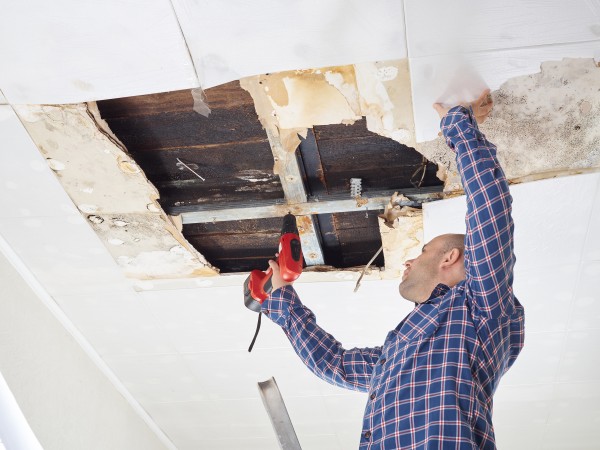
Man repairing collapsed ceiling. Ceiling panels damaged  huge hole in roof from rainwater leakage.Water damaged ceiling .

Remediating flood damage is one of the most common property restoration tasks for a Vancouver home restoration specialist, and the better ones in town understand that certain remediation procedures involve added secondary risks to the structure. The heat generated by drying units can affect the integrity of building materials, and a pro will be expected to know how and to what extent heat levels may pose a problem.

Water damage remediation jobs are all about HAT – Humidity, Airflow and Temperature. All three factors need to be working together to achieve the best drying results. Modern high-flow drying units are very effective, but only when applied and operated by someone with the required level of know how.

Heat concentration and dissipation rates are an important part of the equation and controlling them can sometimes become a concern. HVAC systems are very effective if excess heat is an issue, and they are typically used with portable air conditioners. It’s easy to neglect factoring in the heat that is generated by your drying equipment.

Here is a simple and effective formula to find out the amount of heat your equipment is adding to the structure:

  • Amps x Volts x 3.4 = BTUs/hr.

For example, let’s use these equipment specs:

  • 12 Air movers (@4A each) = 48 amps
  • 2 Dehumidifiers (@10A each) = 20 amps
  • 1 Air scrubber = 3 amps
  • Total amps = 71
  • 71 amps x 115 volts x 3.4 = 27,761 BTU’s/hr.

12,000 BTU’s of heat per hour will be offset by a 1-ton air conditioner. But we can see that even a 2-ton unit wouldn’t be enough to effectively counter the heat radiating off your units, along with other possible heat sources like the outside temperature and body heat from techs and residents. Utilizing a portable air conditioner to serve as a cooler and dehumidifier would be helpful here.

It’s true that the heat coming off your equipment can also benefit you in the wintertime as regards inside climate control, but may at the same time negatively affect the buffer between interior warmth and exterior cold as it relates to maintaining correct temperatures and / or humidity. Knowing the number of BTU’s your units produce helps you control the climate for the best property restoration outcome.

All our certified technicians at Urban Environmental are very familiar with these secondary considerations when it comes to treating flood and water damage in Vancouver homes, and it’s that level of expertise that has allowed us to build the reputation we have for excellent work. It’s true that some people are knowledgeable and skilled enough to take on area drying jobs on their own, and in those cases we hope that this simple equations comes to be useful.