
 Skipping testing may be tempting to save time or money, especially on small renovations. However, the risks that come with it are greater than the convenience. In addition to serious health risks presented by asbestos in the air, homeowners who do not take appropriate steps for removal may also receive a cease-and-desist order, fines from WorkSafeBC, or even not be able to sell their homes in the future. In today’s world of real estate transactions, people more and more often inquire about asbestos-related documents when purchasing pre-1990 houses.
Urban Environmental educates homeowners on the significance of correctly assessing and removing attic mold. For reliable and effective attic mold removal North Vancouver professionals’ inspections and remediation are necessary.
Guide for Renovating Without Worry
Renovating an older house in Vancouver is a good idea because it can contribute a lot of character and value to the building, provided the renovation is executed legally and safely. The task of renovation does not require going through a lot of struggles; all that is needed is to execute it appropriately.
Renovation should start with contacting a professional who can conduct the needed inspection for the property. This approach is the most important step to achieving your renovation goal.
Why Attics in North Vancouver Are So Prone to Mould
The climatic conditions of North Vancouver are one factor contributing to this situation. With an average rainfall of more than 1,500 mm in a year and long periods of humid and gloomy weather, the local homes are subjected to a much greater degree of humidity than other areas of Canada. On top of that, one must consider aspects such as older housing stock, poorly insulated attics, and roofs constructed in the past without taking modern ventilation requirements into account.
Here are the most frequent reasons for attic mold appearance in this part of the country:
- Poor attic ventilation – when the warm and moist air rises to the attic from the living premises and cannot get out, it condenses on the inner surface of the roof sheathing.
- Leaky roofs – water can get into the attic through any openings in flashing, vents, and shingles.
- Lack of insulation – the presence of gaps in the insulation allows warm air to escape into the attic and causes different temperatures, which lead to condensation.
- Home exhaust fans located in the bathroom and kitchen venting into the attic—some old houses have an issue with incorrectly placed exhaust, which leads to venting of moisture into the attic
Signs You May Have Attic Mould
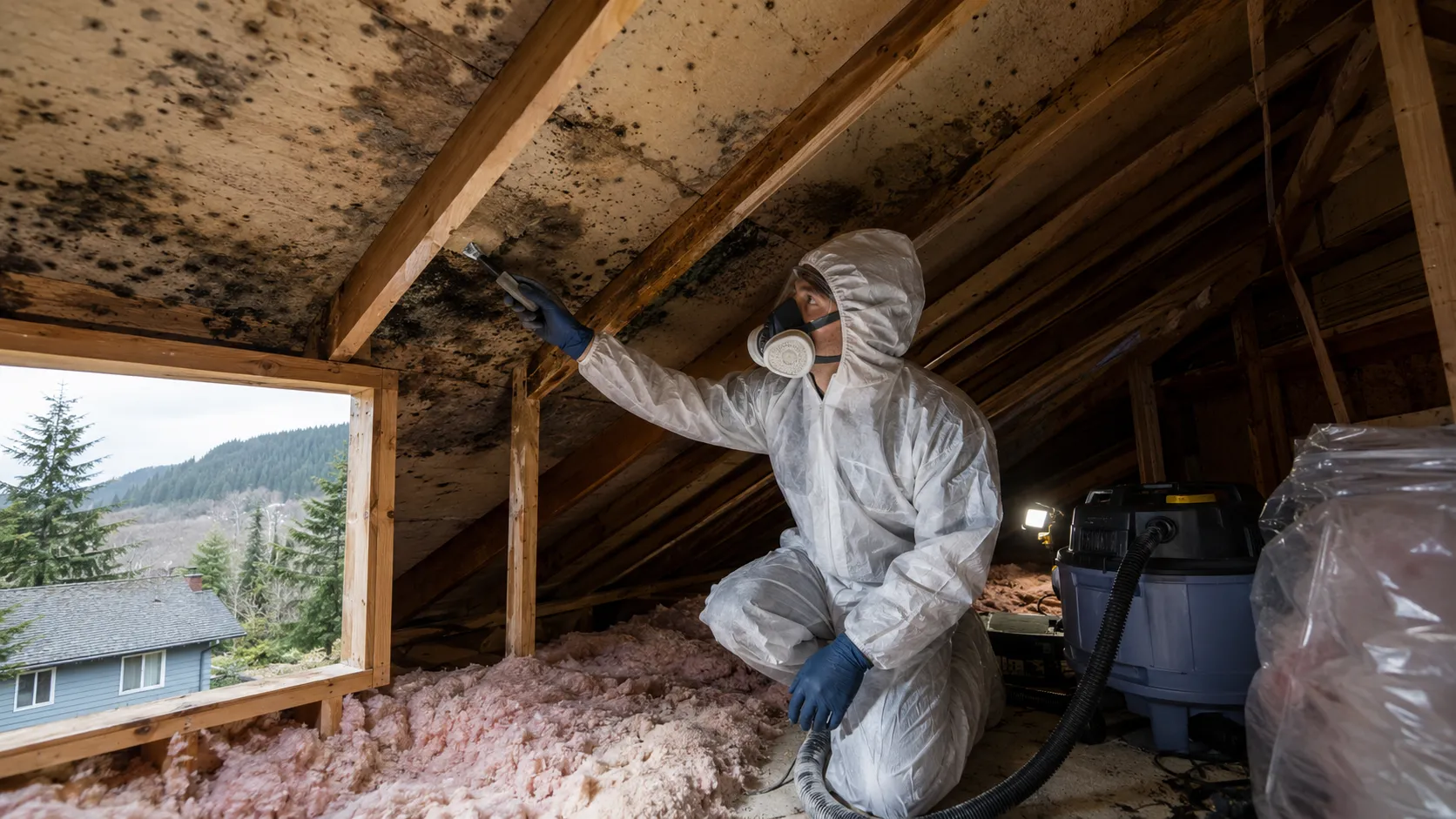
Since attics are rarely seen by many homeowners, mould may form inside the attic unnoticed for months. Here are a few signs to look for:
- A damp, earthy odour in an upstairs room or a closet
- Dark surfaces on the lower part of the roof
- Wet patches on the ceiling
- Increased allergies, coughing, or other respiratory problems for family members
Frost or humidity on the inside of the roof during the winter
If any of these is familiar to you, you should order a professional inspection now. Mould spreads really fast under the right conditions, so a small patch may become a large area in a couple of weeks.
The Attic Mould Removal Process: A Service Guide
Informed knowledge about what a professional remediation process entails can help you know the expectations and ensure that quality service is rendered. Our attic mould removal in North Vancouver guide service process usually involves the following stages:
- Inspection and Evaluation : A qualified technician inspects the attic for the presence of mould, moisture origin, and structural damage. The procedure includes moisture detection and sometimes air quality assessment.
- Containment : The space is sealed before any mould is disturbed to prevent the spores from circulating across the house through the HVAC system and open holes.
- Mould Elimination : The next stage would be dependent on how serious the case is. The commonest treatment is dry ice blasting since it removes mould effectively and does not damage the wood or add moisture back.
- Disinfection and Deodorization : After the visible mould is removed, the entire attic is treated with an antimicrobial solution.
- Elimination of the Reason for Mold Formation : This is a stage that many homeowners neglect, yet it might be one of the most important stages of the process.
Why Choose a Local Specialist
Mould remediation is not a universal service; it comes with specific challenges when applied to North Vancouver homes because of our coastal climate and older housing stock like the ones in Lynn Valley and Deep Cove. It’s crucial to hire a company that understands these local issues rather than a general pest control company or handyman because such companies will provide you with subpar service.
Urban Environmental team is all about finding the source of the mould problem in your attic instead of merely trying to treat it on the surface. We combine comprehensive inspections with safe and tested removal processes as well as practical prevention tips specifically meant for North Vancouver homes.
Final Thoughts
Finding mold in the attic can be a problem that is manageable for quite some time. Due to the wet weather in North Vancouver, it is not a question of if there will be moisture problems in one’s attic; the question is when it will happen unless one ensures proper ventilation, insulation, and regular inspection.
Anyone who has mould in an attic or hasn’t checked the attic in a while should take action. One must contact Urban Environmental to get the attic assessed and a remediation plan that fits the current state of the attic. A healthy attic leads to a healthier home and easier life during rainy seasons. For an attic mould removal in North Vancouver property owner checklist, homeowners should ensure that the attic is properly inspected and any mould concerns are addressed promptly.


